Standby Generator Vs Portable Generator: Which Is Better For Your Home?
![[HERO] Standby Generator Vs Portable Generator: Which Is Better For Your Home?](https://cdn.marblism.com/VDrG_zgVrDv.webp)
When the power goes out, everything stops. Your refrigerator falls silent. The HVAC system shuts down. Medical equipment loses power. And you're left wondering how long you'll be in the dark.
That's why more homeowners are investing in backup power solutions. But here's the question we hear all the time: Should I get a standby generator or a portable generator?
The answer depends on your priorities, your budget, and how much peace of mind you're looking for. In this guide, we'll break down the key differences between these two options so you can make the right choice for your home.
What's the Difference? A Quick Overview
Before we dive into the details, let's establish what we're comparing.
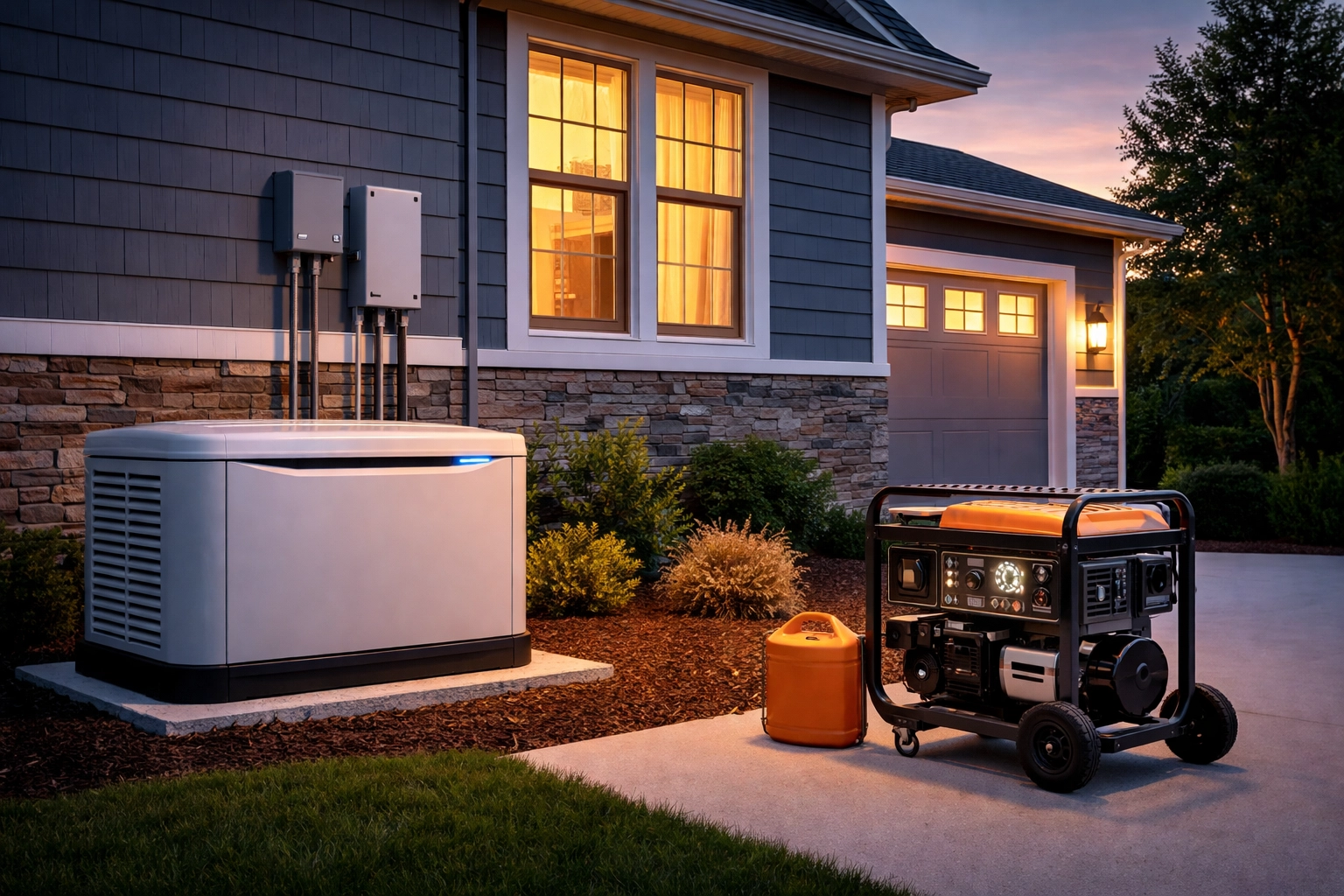
Standby generators are permanently installed units that sit outside your home, much like an air conditioning unit. They connect directly to your electrical panel and your home's natural gas or propane supply. When the power goes out, they turn on automatically, often within seconds, and keep your entire home running until utility power returns.
Portable generators are smaller, mobile units that you store in your garage or shed. When you need them, you wheel them out, fill them with gasoline, start them manually, and run extension cords to the appliances you want to power.
Both serve the same basic purpose: keeping the lights on when the grid fails. But that's where the similarities end.
Head-to-Head Comparison
Here's how standby and portable generators stack up across the factors that matter most to homeowners:
| Factor | Standby Generator | Portable Generator |
|---|---|---|
| Upfront Cost | $5,000–$15,000 (installed) | $500–$4,000 |
| Installation | Professional installation required | No installation needed |
| Operation | Fully automatic | Manual setup and start |
| Fuel Source | Natural gas or propane | Gasoline or diesel |
| Power Capacity | 10 kW–150 kW (whole-home coverage) | 1–15 kW (selected appliances) |
| Runtime | Unlimited with continuous fuel | Limited by tank size |
| Noise Level | Quieter operation | Louder |
| Maintenance | Annual professional service | DIY oil changes and upkeep |
The numbers tell part of the story. But let's dig deeper into what each option actually means for your daily life.
When a Standby Generator Makes Sense
We recommend standby generators for most homeowners, and here's why.
Automatic Protection, Day or Night
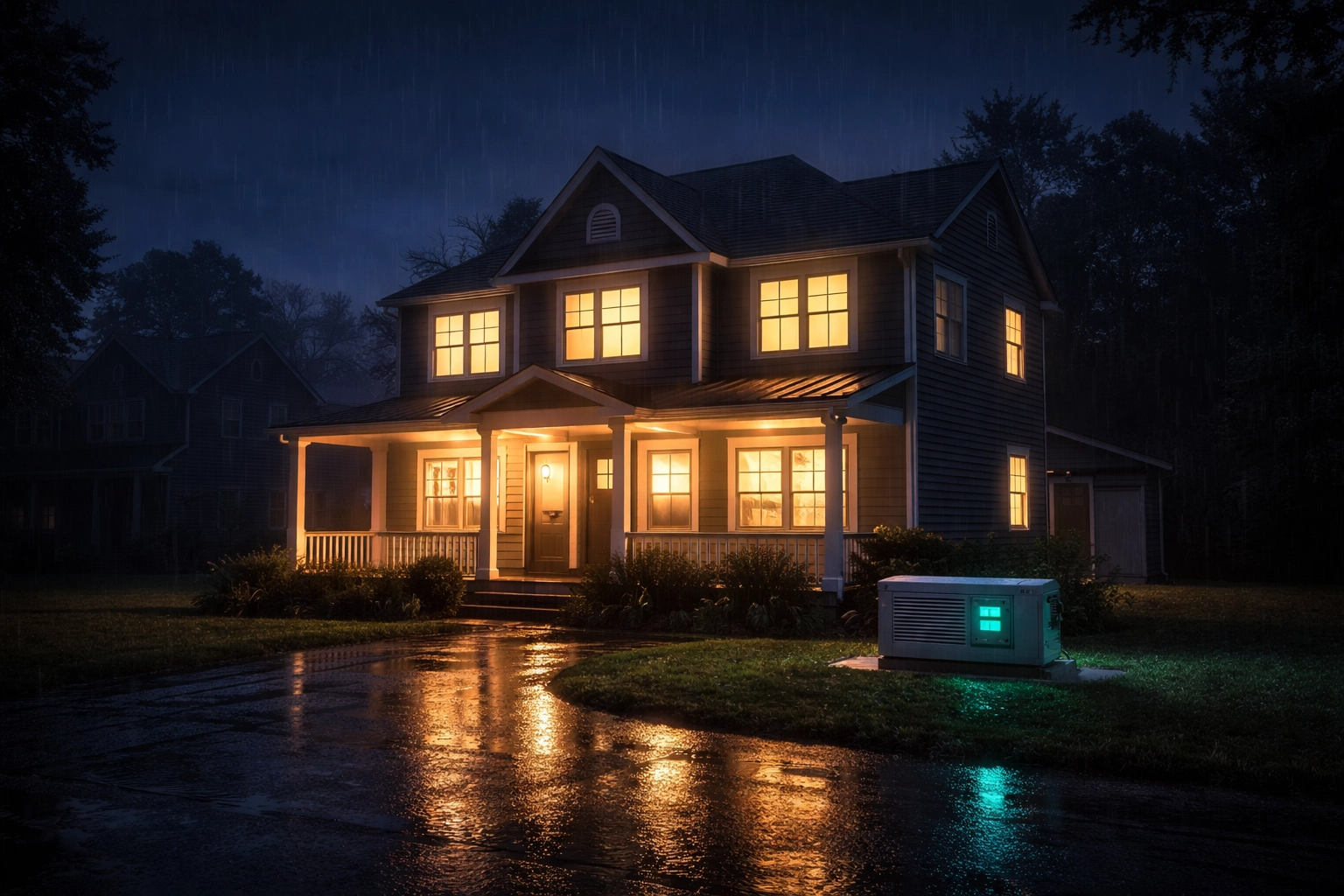
Picture this: A storm rolls through at 3 a.m. while you're asleep. With a standby generator, you might not even notice the outage. The unit detects the power loss, starts automatically within 10–30 seconds, and restores electricity to your entire home. No fumbling in the dark. No dragging equipment out of the garage. No stress.
This hands-free operation is the single biggest advantage of a standby system. Your home stays protected whether you're home, at work, or on vacation.
Whole-Home Power
Standby generators deliver serious capacity. We're talking enough power to run your heating and cooling systems, your refrigerator, your lights, your sump pump, your medical equipment, everything. You don't have to choose which appliances get power. You simply continue living normally.
For families with young children, elderly relatives, or anyone who depends on medical devices, this level of coverage isn't a luxury. It's a necessity.
No Refueling Hassles
Because standby units connect to your existing natural gas line or a propane tank, you never have to worry about running out of fuel during an extended outage. The generator runs as long as necessary, whether that's a few hours or several days.
Compare that to a portable generator, which typically needs refueling every 8–12 hours. During a major storm, gasoline stations may be closed or out of fuel entirely. That's a risk you don't want to take.
Long-Term Value
Yes, standby generators cost more upfront. But they also add value to your home, reduce the risk of costly damage from power outages (think frozen pipes, flooded basements, spoiled food), and provide decades of reliable service with proper maintenance.
When you factor in the true cost of being without power: and the convenience of never worrying about it: the investment makes sense for many homeowners.
When a Portable Generator Makes Sense
Portable generators aren't right for everyone, but they do have their place.
Budget-Conscious Backup
If your primary concern is cost, a portable generator gets you basic backup power for a fraction of the price. Entry-level models start under $500, making them accessible to almost any homeowner.
Just keep in mind: you're trading convenience and capacity for that lower price tag.
Occasional or Short Outages
If you live in an area where outages are rare and typically last only a few hours, a portable generator may be sufficient. You can power your refrigerator, a few lights, and maybe a window AC unit or space heater until the utility company restores service.
Flexibility and Portability
Need power at a job site? Going camping? A portable generator goes where you go. That versatility is valuable if you need backup power in multiple locations or for activities beyond home use.
A Middle-Ground Option
Here's something worth considering: you can connect a larger portable generator to your home's electrical panel using a transfer switch. This setup lets you power more circuits than extension cords alone, while still costing less than a full standby installation.
It's not as seamless as a true standby system, but it's a reasonable compromise for homeowners who want better coverage without the full investment.
Key Considerations Before You Decide
Fuel Availability and Storage
Standby generators eliminate the fuel storage problem entirely. Portable generators require you to keep gasoline on hand: and gasoline degrades over time, creating additional maintenance concerns.
Installation and Permits
Standby installation requires professional electrical work and local permits. At Steady-State Electric, we handle everything: sizing the unit to your home's needs, coordinating with your utility company, pulling permits, and ensuring a code-compliant installation. It's a turnkey process.
Portable generators need no installation, though we do recommend having a transfer switch installed if you plan to connect one to your panel.
Maintenance Requirements
Both types of generators need regular maintenance to stay reliable. Standby units typically require annual professional service. Portable generators need more frequent attention: oil changes, fuel stabilizer, and proper storage: but much of that work can be done yourself.
Noise and Placement
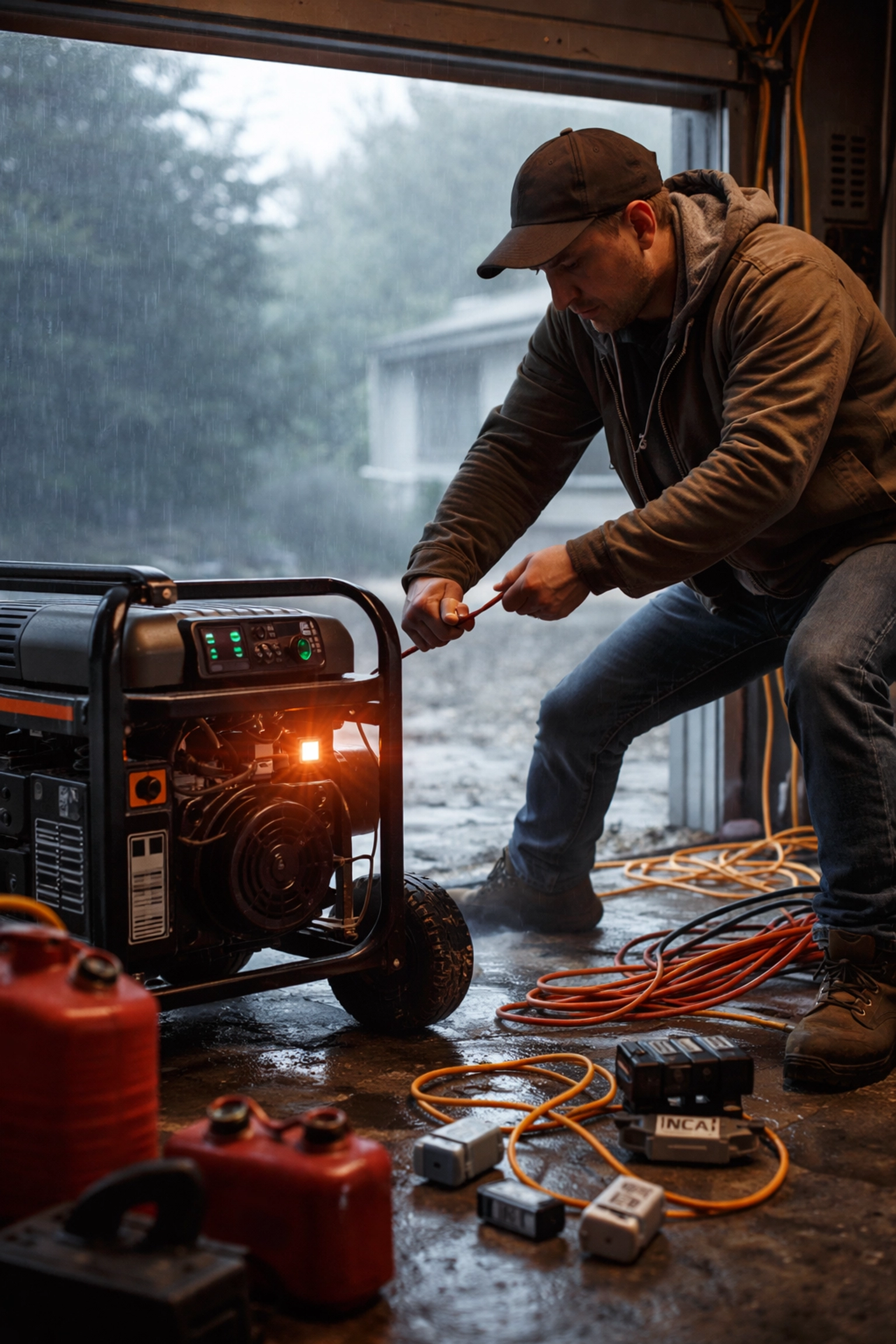
Standby generators are engineered for quieter operation and are installed away from living spaces. Portable generators run louder and must be placed at least 20 feet from your home to prevent carbon monoxide poisoning.
Our Recommendation
At Steady-State Electric, we specialize in standby generator solutions because we believe they offer the best combination of reliability, convenience, and protection for homeowners.
When the power goes out, you shouldn't have to think about it. You shouldn't have to run outside in a storm, pull a cord, and hope everything starts. You shouldn't have to ration power or worry about refueling in the middle of the night.
A properly installed standby generator gives you something invaluable: peace of mind. It's always ready, always watching, always there when you need it.
Ready to Explore Your Options?
Choosing the right generator depends on your home, your family's needs, and your budget. We're here to help you think through those factors and find the solution that fits.
Whether you're ready to move forward with a standby installation or just want to learn more about your options, our team is standing by.
Contact us today for a consultation. Let's make sure your home stays powered( no matter what.)